

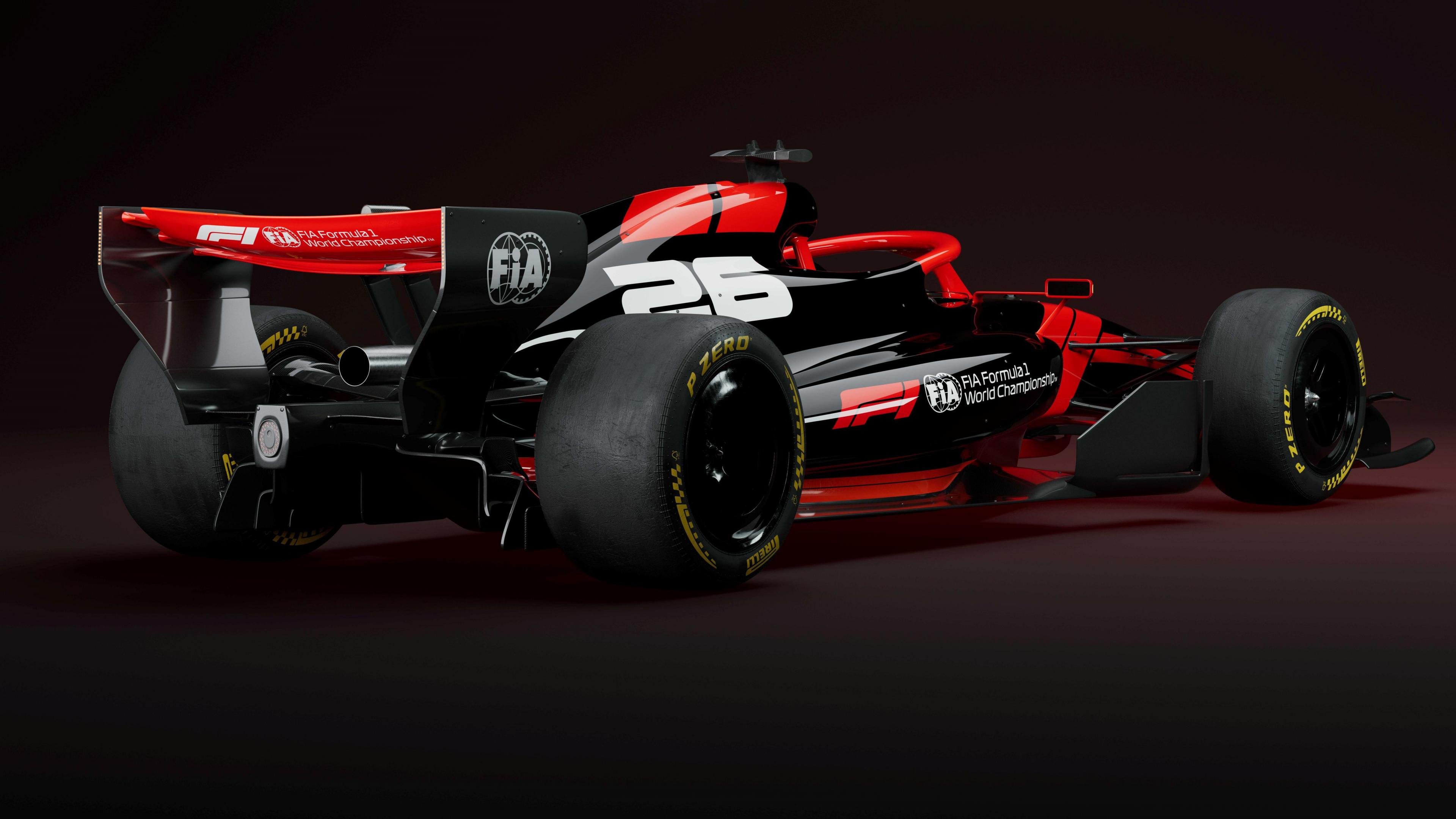
The vehicles for the 2026 season are expected to be more compact, agile and eco-conscious than this year.
The world of Formula 1 has unveiled the official language that will be used to reference the advanced features of its upcoming 2026 technical rules.
The sport is introducing what is considered the largest regulation change in its illustrious history next season, featuring new chassis and engine rules and the mandatory use of eco-friendly fuels.
The updated 1.6-litre V6 turbo hybrids, which keep the 1.6-litre V6 configuration, boast a greatly enhanced energy storage, driving major innovations in the cars' aerodynamics.
During grand prix events, pilots will strategically manage electrical energy – potentially on flying laps – to secure the peak lap time.
Wide-ranging research were carried out with a wide range of fans, including long-time followers and newcomers, to understand which terminology would aid comprehension of the main elements of the 2026 changes.
The key objective was to make a set of intricate technical aspects of the competition as easy to grasp as possible for the widest audience.
Consequently, previous placeholder terms for specific components – such as "x-mode and z-mode" for the moveable wings – have been phased out in favour of intuitive labels that clearly indicate the real-world effect of the innovation.
Exploring the New Tech
According to rule-makers that drivers will have increased agency to determine tactics regarding power usage, harvesting, and saving energy.
The upcoming changes mandate a range of settings that will be shown on TV overlays to aid the viewers' comprehension of the on-track action.
- Attack Mode: This replaces the existing Drag Reduction System. It provides a burst of extra electrical energy accessible when a car is within one second the leading car to facilitate an overtaking maneuver.
- Boost Mode: This is a driver-operated energy deployment from the energy recovery system that can be utilized during overtaking or defending. It provides the pilot maximum power at the click of a switch.
Both of these crucial modes will have to be deployed strategically, as the overall battery capacity is strictly limited.
- Active Aerodynamics: Both the nose and rear wings adjust their angles – spreading on the straights for minimal air resistance and higher speed, and sealing in the turns for maximum downforce.
- Recharge: The system can replenish their battery with power recovered from braking, or during partial power application at the straight's end or in corners where only limited engine output is used.
What's Changing on the Cars?
The vehicles for the new era will be more compact and lighter relative to current models, with a distance between axles cut by 200mm to 3,400mm, car width reduced by 100mm – down to 1,900mm – and the lowest permissible weight reduced by 30kg.
Cumulative downforce is expected to drop by approximately a significant margin, although teams will inevitably claw this back as they develop their cars.
Aerodynamic drag has been reduced by 40%. The vehicles will feature adjustable aero systems – front and rear wings will move on the straight sections to improve speed and enhance velocity and click back into place for maximum cornering performance.
Pirelli tyres will retain the current rim size, but the actual tyres will be reduced in width, by a quarter-centimetre on the front and three centimetres on the rear.
What's Changing in the Engines?
The new power units will have an roughly half-and-half distribution in horsepower generated by the petrol engine and the battery and motor, increasing from about one-fifth electric power in the current formula.
The energy recovery system is streamlined through the deletion of the MGU-H, the sophisticated and pricey unit that generated electricity from the exhaust turbo.
Every car on the grid will be required to run on carbon-neutral fuel, produced using organic sources or synthetic production methods.


